MINISTRY OF WATER DEVELOPMENT AND SANITATION SPEECH DURING THE LAUNCH OF THE 2025 WATER SUPPLY AND SANITATION SECTOR REPORT
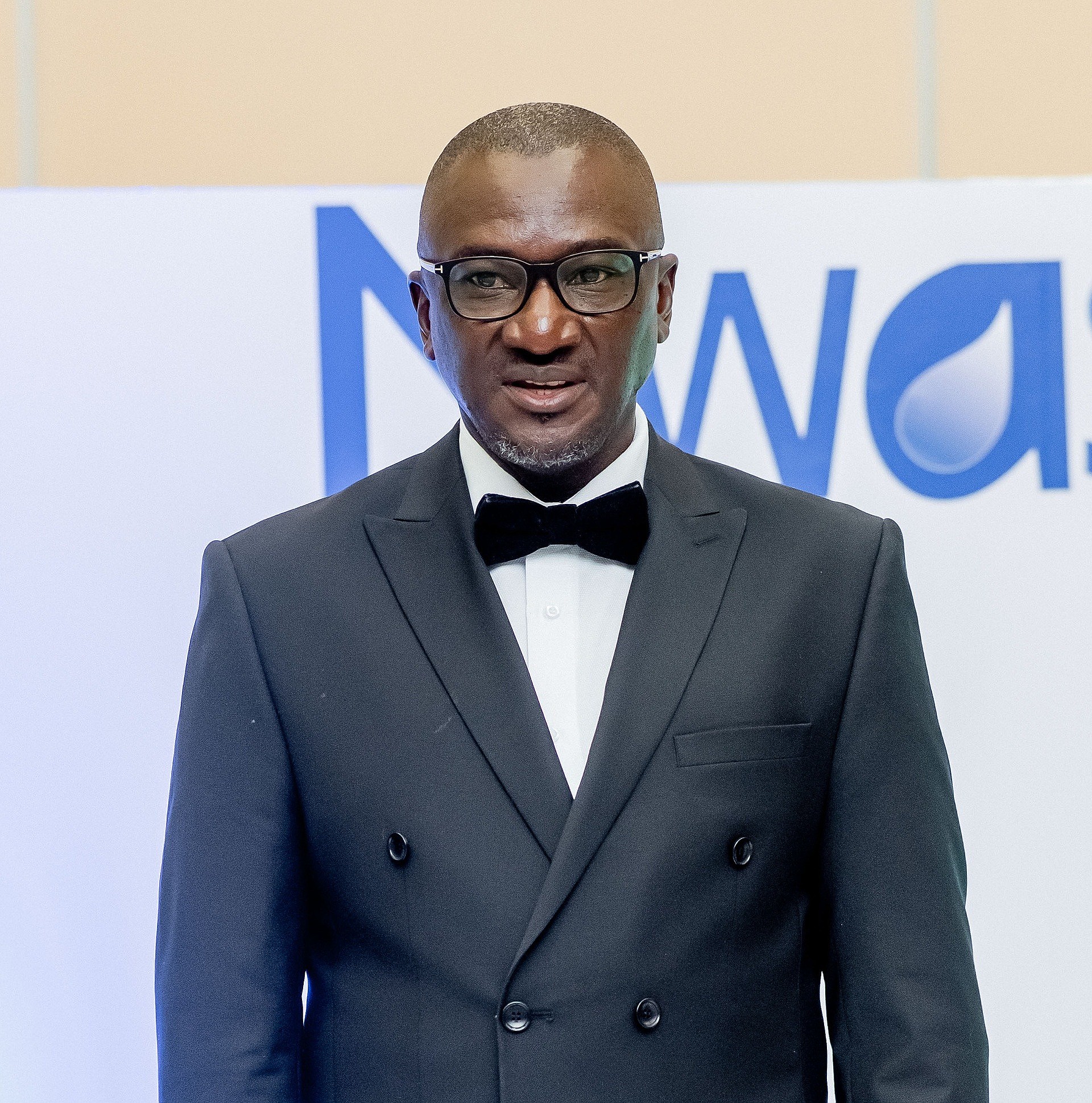
Hon. Eng. Collins Nzovu, MP Minister of Water Development and Sanitation, launches the 2024 Water Supply and Sanitation Sector Report on Monday, 27th April 2026 at Mulungushi International Conference Centre, Lusaka.
SPEECH FOR THE HON. ENG. COLLINS NZOVU, MP
MINISTER OF WATER DEVELOPMENT AND SANITATION
DURING THE LAUNCH OF THE 2024 WATER SUPPLY AND SANITATION SECTOR REPORT
MONDAY, 27TH APRIL 2026
MULUNGUSHI INTERNATIONAL CONFERENCE CENTRE, LUSAKA
Minister of Local Government and Rural Development, Mr. Gift Simuunza Sialubalo, MP;
Permanent Secretary for the Ministry of Water Development and Sanitation, Eng. Romas Kamanga;
Representatives of Cooperating Partners in the Water and Sanitation Sector;
Senior Government Officials Present;
NWASCO Board Chairperson, Mr. Silvester Hibajene;
NWASCO Board Members;
Boards of Directors for Commercial Utilities;
NWASCO Director, Eng. Kelvin Chitumbo;
Managing Directors for Commercial Utilities;
Chief Executive Officers from Other Regulatory Bodies;
Distinguished Guests;
Members of the Press;
Ladies and Gentlemen;
It is once again that time of the year when we gather to witness the launch of the Water Supply and Sanitation Sector Report. I am greatly honoured and pleased to be part of this important and auspicious occasion. It is particularly gratifying to note that this is the 24th edition of the report and that its launch coincides with the silver jubilee celebration of the regulation of water supply and sanitation services in Zambia. This milestone underscores our collective commitment to transparency, accountability, and continuous improvement within the sector.
This event forms part of our stakeholder engagement efforts aimed at disseminating information on the performance of water and sanitation service providers for the year 2025. I am confident that the findings contained in this report will further motivate commercial utilities to enhance service delivery and improve operational efficiency.
Distinguished Guests, Ladies and Gentlemen, water remains a critical pillar for national development. It is for this reason that His Excellency, the President of the Republic of Zambia, Mr. Hakainde Hichilema, established the Ministry of Water Development and Sanitation in September 2021 to provide focused leadership in addressing water and sanitation challenges. Consequently, increasing access to safe water and adequate sanitation remains a key priority under the Eighth National Development Plan.
The Government, through the Ministry of Water Development and Sanitation, remains firmly committed to ensuring that adequate, reliable, and sustainable water supply and sanitation services are accessible to all citizens — men and women, boys and girls alike. However, the attainment of Vision 2030 requires collective effort. All stakeholders must play their part to ensure meaningful and measurable progress. In particular, commercial utilities must continue improving service delivery and meeting prescribed minimum service level benchmarks.
I am encouraged by the strides made thus far towards achieving the national targets of 100 percent water supply coverage and 90 percent sanitation coverage by 2030, in alignment with Sustainable Development Goal Six.
Ladies and Gentlemen, despite this progress, the sector continues to face numerous challenges. These include ageing and inadequate infrastructure, high levels of non-revenue water, pollution of water sources, encroachment on infrastructure, as well as vandalism and theft of installations. These challenges have been further worsened by the effects of climate change, which have led to the drying up of water sources and increased load management.
Additionally, rapid population growth, urbanisation, and increased demand for water across various sectors of the economy continue to exert significant pressure on existing infrastructure. Addressing these challenges requires deliberate policy shifts, enhanced collaboration, and the mobilisation of adequate financial resources. We must also remain vigilant in preventing outbreaks of waterborne diseases such as cholera.
The Ministry, working closely with key stakeholders, is implementing targeted interventions to address these challenges and accelerate progress towards universal access to water and sanitation.
Ladies and Gentlemen, today we are also launching the Ministry’s Change Management and Gender Strategy and Implementation Plan, which marks an important milestone in advancing the Public Service Change Management Framework within the Ministry of Water Development and Sanitation. This strategy demonstrates our commitment to strengthening institutional structures, improving efficiency, and enhancing service delivery as we work towards achieving national priorities and global commitments in the water and sanitation sector.
The strategy reflects a deliberate and collaborative effort to build a more responsive, coordinated, and resilient ministry. In this regard, I wish to sincerely acknowledge the support provided by the Nexus Energy and Water Programme for Zambia (NEWZA-GIZ) in the development of this strategy. I also extend my appreciation to all stakeholders and partners whose active participation and contributions have been critical throughout this process.
We firmly believe that meaningful and sustainable transformation can only be achieved through shared ownership and practical collaboration. As we launch this strategy, I therefore call upon all stakeholders and partners to fully support its implementation. Its success will depend not only on institutional reforms, but also on our collective commitment to collaboration, accountability, and cultural transformation. Through this shared effort, we will strengthen the Ministry’s impact and improve water and sanitation service delivery for all Zambians.
Distinguished Guests, Ladies and Gentlemen, Government has undertaken significant policy reforms, including the promulgation of the National Water Policy of 2024, which I had the honour of launching in October 2024. Furthermore, the revision of the Water Supply and Sanitation Act No. 28 of 1997 and the Water Resources Management Act No. 21 of 2011 is underway, with the latter at an advanced stage. These reforms are intended to address existing gaps and strengthen the sector’s legal and institutional framework.
To operationalise these reforms, the Ministry is implementing its 2022–2026 Strategic Plan under the theme: “A proactive ministry ensuring water security and adequate sanitation for all.”
Ladies and Gentlemen, as you are aware, Zambia experienced one of the worst droughts in its history, prompting His Excellency the President, Mr. Hakainde Hichilema, to declare the drought a national disaster and emergency on 29th February 2024. This situation had a significant impact on the water sector, leading to widespread water shortages due to reduced rainfall and declining reservoir levels. Load shedding further compounded these challenges, affecting service delivery by water utilities.
However, this crisis also provided an opportunity for us to reassess and strengthen our resilience as a sector. In response, Government developed a comprehensive Drought Response Plan aimed at enhancing water storage capacity, promoting water conservation, and expanding the use of groundwater and alternative water sources.
Additionally, a National Rainwater Harvesting Strategy and Implementation Plan was developed in September 2024 to improve water security. To spearhead implementation, I constituted a multi-stakeholder response team, which has since made significant progress.
Notably, minor maintenance works have been completed on 519 dams across several provinces, while major rehabilitation works have been undertaken on key dams, including Chitindi and Kabombwa. Two dams — Kawawa and Muyembe — have since been completed. Feasibility studies are also underway for major dam projects in Kalomo, Lufupa, and Chongwe.
Further interventions include the drilling of twenty-two commercial boreholes to supplement water supply, the procurement of fifty-five standby water pumps for distribution to commercial utilities, and the drilling of 156 boreholes in drought-affected districts under rural water supply initiatives. These interventions are expected to benefit more than two million people.
I urge the response team to expedite the remaining works to ensure timely completion.
Distinguished Guests, Ladies and Gentlemen, as part of these efforts, I launched the National Water Conservation Campaign spearheaded by NWASCO with support from GIZ-NEWZA. This initiative seeks to promote responsible water usage among households, businesses, and industries, thereby enhancing long-term sustainability. The campaign also addresses the dangers associated with vandalism, theft, and encroachment on water infrastructure.
Allow me to caution members of the public that such acts are illegal and will be met with the full force of the law.
Ladies and Gentlemen, non-revenue water remains a major concern, currently exceeding 50 percent due to both physical and commercial losses. To address this challenge, the Ministry is implementing the 2022–2026 National Non-Revenue Water Management Strategy, supported by a dedicated task force.
I wish to emphasise that reducing non-revenue water is critical for the financial sustainability of commercial utilities. I therefore direct the task force to ensure the full and effective implementation of this strategy.
Distinguished Guests, Ladies and Gentlemen, the recurrence of cholera outbreaks continues to pose a serious public health threat. Recognising that cholera is largely linked to unsafe water and poor sanitation, Government has strengthened its response through improved sanitation infrastructure, hygiene promotion, and better water management.
In addition, each commercial utility was allocated five million Kwacha ahead of the 2024/2025 rainy season to implement preventive measures. I am pleased to note that these interventions have contributed significantly to keeping cholera at bay this year.
Ladies and Gentlemen, despite substantial investments by Government and cooperating partners, financing for the sector remains inadequate. This challenge has been compounded by tariffs that have not been adjusted over the past five years, thereby placing considerable financial strain on utilities.
Cost-reflective tariffs are essential to ensure sustainable service delivery, infrastructure development, and expansion of services. Government is therefore engaging stakeholders to implement tariff adjustments that strike a balance between affordability and sustainability.
Distinguished Guests, Ladies and Gentlemen, allow me to acknowledge the invaluable support received from our cooperating partners in recent months. This support includes essential equipment such as bulk and domestic water meters, motorcycles, computers, laboratory equipment, and energy efficiency tools provided through programmes such as the GIZ – Nexus Energy and Water Programme for Zambia (NEWZA) and the Zambia Energy Efficiency and Sustainable Transformation (ZEEST) Project, with funding support from the European Union and UNICEF.
As I conclude, I urge all utilities to ensure the effective and efficient utilisation of these resources.
It is now my honour and privilege to officially launch the Ministry’s Change Management and Gender Strategy and Implementation Plan, together with the NWASCO Water Supply and Sanitation Sector Report.
I thank you for your attention, and may God bless you all.